lunes, 24 de septiembre de 2018

Answer to: How do you think we could empower our Colombian students to critically spot fake news?
In today's class we talked about what critical literacy was by Ira Shore. Following we read an article called "Fake news: improved critical literacy skills are key to telling fact from fiction." by Jonathan Douglas.
The first thing I will say we can do as future teachers to empower our Colombian students to critically spot fake news, is to teach through common sense. We need to spread the knowledge that they need to not believe straight away what they read or watch on internet. Also, that as they see how the social networks  behave is implicit that anyone can spread viral fake content and even if they read those fake news, they are the ones who will decide if that is true for them.
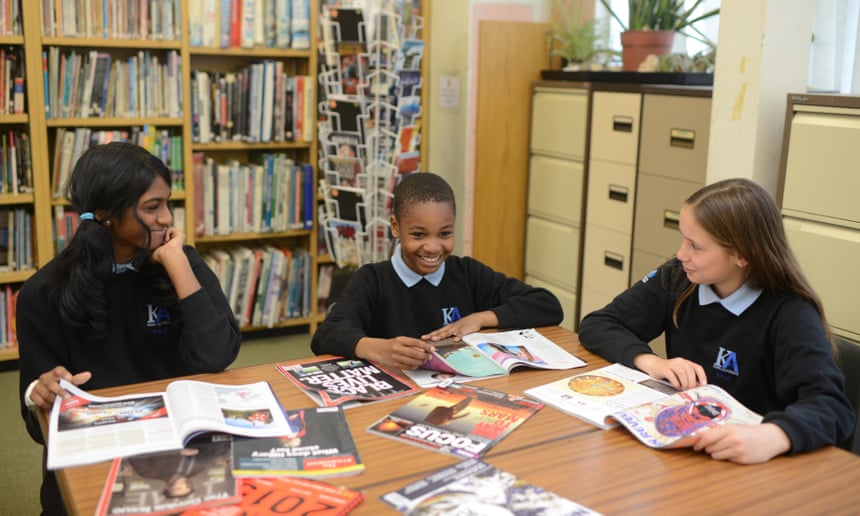


The second thing I will write about is related to what I.Shore said "When they lose touch with purpose in speaking or writing, they struggle to mobilize their inherent language competencies." Here we can read that if students do not take advantage of the tools they have around them to enhance their literacy skills and judge by themselves, they will be easily poisoned by the ignorance towards really and fiction in the words. Most students think that if something is written in a book or article on a newspaper it has to be a solid true. Which, in most of the cases can be a double blade sword.  

"...It helps children accurately understand and interpret information by making connections between what they read and what they already know, working out what is important, and spotting the difference between fact and fiction." (J.Douglas. 2017.) Relate to this I will write that probably due to the connections with social media students may be more used to be critical with what they encounter navigating the web. Sadly, most of them decide to start spreading intentionally or not this fake news which just hinders even more students critical thinking process.


Lastly, to say that a really good way to encourage students to spot fake news is to play with what they already know. Games such as true or false or even doing an exercise in class with a news realte to something they are interested in may be a great start. 

lunes, 10 de septiembre de 2018

A critical commentary of: "Where is the Outrage? Critical Pedagogy in Dark Times" by Henry Giroux

First of all, I want to say that I am not really good doing critical commentaries, principally because I think I get really involved in what I think I agree or disagree with so, I will request feedback after posting this.

In the video, during the first minutes, I will say that I feel that thought Mr. Giroux has some reason while talking about the path education is following these days I also disagree a certain level with his romantic view of how education must be.


"There is a need to use education to mobilize students to critically engage agents, attentive to addressing important social issues..." I agree with what he says here because it is not possible to ignore the importance of telling the younger ones that things do not change just because you want it. The world is not that easy and without a real interaction with these problematics things like low quality of education and few spots in high-level education will keep going until everything is owned by the hands of the powerful ones.


But I also think that the way in which he talks about this is also quite uncomfortable because it reminds me of someone that wants to convince to lead, not to just inform and give courage. This is just my impression of hearing his tone. And, coming back to what I said about his idealized view of the education, I do really think that he truly believes that most people care about the future of our school and universities. But, at the same time is quite naive to think that something like that can be changed just by pointing out all the bad sides of the problematics.


"The worst dimension of power is when it makes itself invisible." This quote is also really interesting. He puts in a spotlight how education and people with good ideas and thoughts are easily put aside by the words and actions of others with more influence. Most of the time because the ignorance implicated in sharing and making strong relationships with people how really care about a change are lacking something.


Lastly to say that in this quote  "Young black men...are guilty of criminal behavior not because of crimes the might commit but because they are the product of a collective imagination paralyzed by the racism of a white supremacist culture that can only view them as a dangerous nightmare." I think he stands out a really good point regarding social division because of skin color or ethnic. Showing that color does not reduce your ability to question and criticize the events in the world and the problematics of our environments.

Finally, I want to point out that I enjoyed most of the talk of Mr.Giroux, the only problem for me was that sometimes he talked too much and become redundant or very intense about a specific topic. But at last, He made think about how I see the education and what I am going to do to give something to others to see things differents from me too.


lunes, 3 de septiembre de 2018

Stereotypes time

In today class we watch some videos about stereotypes and thoughts about other cultures. Stereotypes are ideas or just things that are said from mouth to mouth. But, as life is, some stereotypes are based on reality and even though sometimes they are rude and change the appearance of other countries, they cannot simply disappear.

Maybe some of the most harmful stereotypes are the ones that try to ridicule your culture. An example of this is the opinion many people outside Colombia have about us. We are naturally aggressive, drug dealers and thieves. But, obviously, we know that this is not true at all.


Since we started thinking rationally, our species develop different systems to create relationships with other humans and our environment. Stereotypes, tags or denominations are some of them. We as individuals most of the times are conscious of what kind of person you are. Funny, enthusiastic, temperamental, sensitive, practical, arrogant, there are hundreds of adjectives that we can use to describe ourselves and even this process of self-assessment is a kind of stereotype because we are trying to define ourselves to fit into a group.

Though this may sound strange and even hypocritical because probably we do not like to be etiquette with an adjective we do not considerate that define us. We should consider stereotypes and etiquettes as "trues". I consider after watching all these videos that stereotypes, as I write before, are create based on reality but obviously they can also be wrong. This is why I think stereotypes are more a kind of guide. This guide as a whole has it's based in general things, as our nationality, our age, our gender,  our economic status, our education. This is just the tip of the iceberg a person truly is, sure you can be a little temperamental if you are from a specific part of the world because that is the way you were raised but I do not mean that you are also funny and certain situations do not bother you at all. 

Lastly, to say that stereotypes just give us an idea of how most people see us based on the things mentioned early but this adjectives or ideas are just not enough to describe how wonderful everyone is, how different, how variable, how imaginative and how capable. Every person is a completely new world and such as all planets have a spherical shape it does not mean that we all have the same atmosphere and material inside us. At last, it depends upon us to show to others who we really are and what truly can be defined as "us".

Homeschooling: an educational alternative

Traditional schools have always been top in the educational system. For years, formal education has been referred as the only sort of educ...